XPeng CEO: Flying Cars, Autonomy & Robots for China
XPeng CEO proposes flying cars, L4 autonomy & humanoid robots for China's future. Read more about his bold vision for transportation!
XPeng CEO Proposes Bold Vision for China's Automotive Future: Flying Cars, L4 Autonomy, and Humanoid Robots
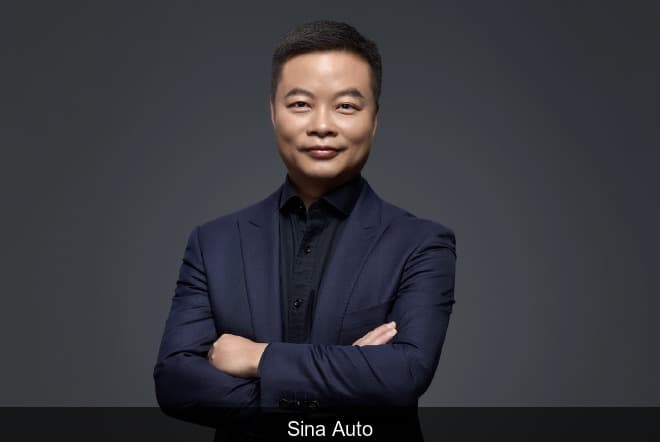
He Xiaopeng, the Chairman and CEO of XPeng Motors, one of China's leading electric vehicle (EV) manufacturers, has presented three ambitious proposals to the National People's Congress (NPC) outlining a vision for the future of Chinese transportation and technology. These proposals focus on accelerating the development and deployment of flying cars, pushing autonomous driving technology beyond Level 2 (L2) to Level 4 (L4), and fostering innovation in advanced intelligent humanoid robots. This comes as Chinese car brands like BYD, NIO, XPeng, Li Auto, Geely, Chery, and Great Wall are making waves globally.
Flying High: Optimizing Airspace and Tax Policies for Flying Cars
China's "15th Five-Year Plan" identifies the low-altitude economy as a national strategic emerging industry, and XPeng believes flying cars are key to unlocking its potential. Currently, the industry faces hurdles due to centralized airspace management and unclear tax policies. He Xiaopeng proposes decentralizing airspace management, establishing a collaborative management system involving the military, local governments, and the public. He also suggests clarifying the tax classification of flying cars that meet airworthiness standards and implementing phased tax reduction and exemption policies to stimulate research, production, and market demand.
The goal is to foster technological independence and industrial leadership in the flying car sector. Imagine a future where you could bypass gridlock in a personal aircraft, similar to a futuristic version of a Tesla Model S, but soaring above the traffic. XPeng's proposals aim to make that vision a reality, potentially giving China a significant edge in the emerging low-altitude economy. According to XPeng, breaking down institutional bottlenecks will allow China's flying car industry to achieve technological independence, standard leadership, and industrial leadership.
Own a Chinese car?
We localize multimedia systems, navigation, and voice assistants for BYD, NIO, Chery, Haval and 40+ brands. Your language, your country — fully adapted.
Get a free consultation →Leaping to L4: Accelerating Autonomous Driving Development
Autonomous driving is another critical area for China's automotive industry, and XPeng is advocating for a significant policy shift. The current "graded and progressive" management framework, which emphasizes a step-by-step approach from L2 to L3 and then L4, is seen as hindering rapid technology iteration and commercialization. XPeng proposes skipping L3 altogether and focusing on a direct transition from L2 to L4. This would involve simplifying regulations, clarifying the registration and traffic management system for L4 vehicles, and promoting compliant road access nationwide.
This bold move aims to transform China's existing advantages in L2 assisted driving into a competitive edge in the L4 autonomous driving era. Think of it as going from the advanced driver-assistance systems (ADAS) found in many modern cars, like lane keeping assist and adaptive cruise control, directly to a fully self-driving experience, similar to what Tesla is striving for with its Full Self-Driving (FSD) system, but potentially with a more streamlined regulatory pathway. XPeng also suggests granting local pilot management rights for L4 unmanned driving applications in specific scenarios, such as nighttime unmanned driving charging and car washing.
Native Advertising
Navigating the complexities of importing and using Chinese cars like BYD, NIO, XPeng, Li Auto, Geely, Chery, and Great Wall in the Global / US / UK market can be tricky. One often overlooked aspect is ensuring the car's software and user interface are fully localized for your region. Many of these vehicles come with multimedia systems and menus primarily designed for the Chinese market.
That's where professional localization services come in. Imagine driving your new electric SUV and having seamless access to English-language navigation, entertainment, and vehicle settings. Services like multimedia and menu localization to English are essential for a smooth user experience. Furthermore, installing popular apps like Google Maps, Spotify, and WhatsApp can greatly enhance the car's functionality. A SIM card with unlimited mobile internet ensures constant connectivity, while a voice assistant in English makes interacting with the car safer and more convenient. Finally, an AI driving assistant tailored to your region's traffic laws and road conditions can provide an extra layer of safety and assistance.
Learn more → https://example.com/en
Humanoid Robots: Building the "Edge-Side Local Brain"
XPeng's third proposal focuses on advanced intelligent humanoid robots, which are seen as the physical embodiment of artificial intelligence. While China has made progress in motion control systems for robots, XPeng believes there's a need to focus on developing the "brain" – the autonomous thinking and decision-making capabilities – locally within the robot. This "edge-side local brain" approach, driven by large physical world models, is considered more conducive to deploying robots in industrial, commercial, and even home scenarios.
XPeng suggests introducing targeted research and development encouragement policies, such as establishing a national special research and development fund and streamlining tax policies, to support the development of these advanced robots. They also advocate for accelerating the construction of an intelligent standard system for humanoid robots, similar to the autonomous driving grading standards in the automotive industry. This would involve establishing technical specifications and supporting requirements for core indicators such as computing power, data, application scenarios, and training intensity. The goal is to position China as a world leader in humanoid robot technology, similar to how Toyota has become synonymous with hybrid technology. The investment needed is huge, but the potential payoff is even bigger. According to some estimates, the humanoid robot market could be worth $150 billion by 2030.
Voice assistant in your language
AI-powered voice control that actually understands you. Works offline. Available for 50+ Chinese car models.
See our services →The Big Picture
He Xiaopeng's proposals reflect a broader ambition for China to become a global leader in cutting-edge technologies. By addressing regulatory hurdles, incentivizing innovation, and fostering collaboration between government, industry, and research institutions, China aims to accelerate the development and deployment of flying cars, autonomous driving, and humanoid robots. The success of these initiatives could have a profound impact on the future of transportation, manufacturing, and everyday life, not just in China, but around the world. The price of failure is being left behind in the global technology race.
FAQ
Q: What are the main challenges facing the flying car industry in China?
A: According to XPeng's proposals, the main challenges are centralized airspace management, unclear tax policies, and a lack of coordination between different government departments.
Q: Why is XPeng advocating for a direct transition from L2 to L4 autonomous driving?
A: XPeng believes that skipping L3 will accelerate technology iteration and commercialization, allowing China to capitalize on its existing advantages in L2 assisted driving and compete more effectively in the global autonomous driving market.
Q: What is the "edge-side local brain" approach to humanoid robots, and why is it important?
A: The "edge-side local brain" approach refers to developing autonomous thinking and decision-making capabilities locally within the robot, rather than relying on centralized cloud-based processing. This is considered more conducive to deploying robots in real-world scenarios and promoting their commercialization.