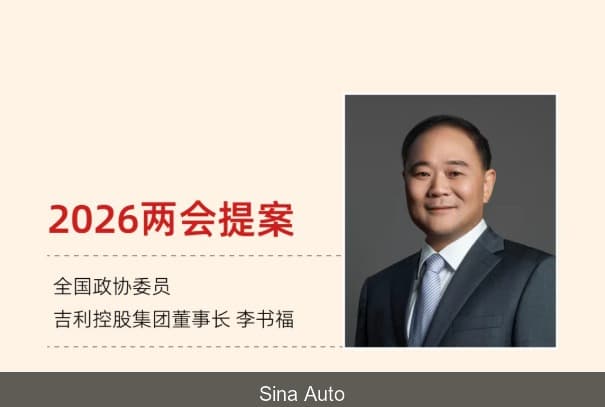
Geely's Li Shufu: Green Transport & Intelligent Vehicles
Geely Chairman Li Shufu proposes green transport & intelligent vehicle development in China. Read more about his vision for the future of mobility!
Geely Chairman Li Shufu Pushes for Green Transport and Intelligent Vehicle Development in China
Geely Chairman Li Shufu, a prominent figure in the Chinese automotive industry, has presented key proposals at the 2026 National People's Congress (NPC) focusing on green transportation, intelligent vehicle education, and accessible mobility. Li's proposals aim to accelerate the high-quality development of the automotive industry and improve the lives of Chinese citizens, according to Sina Auto. These proposals come as Chinese car brands like BYD, NIO, XPeng, Li Auto, Geely, Chery, and Great Wall continue to gain global recognition.
Methanol Electric Trucks for a Greener Future
China's freight sector, responsible for moving over 56 billion tons of goods in 2024, relies heavily on road transport, accounting for 73.6% of the total volume and a market worth approximately CNY 4.3 trillion. Li Shufu proposes prioritizing methanol electric commercial trucks to reduce emissions and ensure transport capacity. These trucks offer economic and environmental advantages, convenient refueling, and suitability for cold climates, making them ideal for medium- and long-distance freight scenarios exceeding 400 kilometers. This is a significant push towards achieving China's "dual carbon" goals, aiming for peak carbon emissions before 2030 and carbon neutrality before 2060.
Li suggests deploying methanol refueling facilities along key logistics routes to create a green freight corridor. Methanol fuel offers a potential alternative to diesel, reducing reliance on fossil fuels. While electric trucks are gaining popularity, methanol offers a higher energy density and faster refueling times, addressing some of the range anxiety issues associated with battery-electric vehicles, especially in demanding commercial applications. Think of it as a bridge between traditional combustion and full electrification, similar to how some manufacturers are exploring hydrogen combustion engines.
Own a Chinese car?
We localize multimedia systems, navigation, and voice assistants for BYD, NIO, Chery, Haval and 40+ brands. Your language, your country — fully adapted.
Get a free consultation →Establishing "Intelligent Electric Vehicles" as a Core Academic Discipline
The rapid advancement of intelligent connected new energy vehicles in China faces a critical bottleneck: a shortage of skilled professionals. Li Shufu advocates for establishing "Intelligent Electric Vehicles" as a first-level interdisciplinary subject in Chinese universities. This move aims to bridge the gap between traditional automotive engineering and the demands of the modern, tech-driven automotive industry. The current system struggles to produce graduates with the interdisciplinary skills needed for innovation in areas like autonomous driving, battery technology, and software integration.
The proposal calls for the Ministry of Education to formally establish this discipline in the 2027 round of discipline and professional catalog adjustments. This would provide a framework for universities to develop specialized curricula, research programs, and resource allocation strategies. The goal is to cultivate a new generation of engineers and researchers capable of driving innovation and ensuring the global competitiveness of the Chinese automotive industry. This is especially important as Chinese brands like BYD and NIO are increasingly competing with established global players like Tesla and Volkswagen.

Native Advertising
Thinking about importing a Chinese electric vehicle like a BYD or XPeng to the US or UK? One of the biggest challenges is ensuring the infotainment system and driver-assistance features are fully functional and user-friendly in English. Many of these systems are designed primarily for the Chinese market, with menus, voice commands, and even navigation apps optimized for Mandarin.
That's where localization services come in. Imagine having your Chinese EV's multimedia system completely translated into English, with intuitive menus and a voice assistant that understands your commands perfectly. Plus, having access to essential apps like Google Maps, Spotify, and WhatsApp directly integrated into the system. A local SIM card with unlimited data ensures seamless connectivity for navigation and entertainment. Some services even offer AI driving assistant customization for optimal performance in your region.
Learn more → https://example.com/en
Enhancing Accessibility with Barrier-Free Taxi Services
Recognizing the needs of an aging population and the importance of inclusivity, Li Shufu proposes accelerating the promotion of urban barrier-free taxi service systems. Many Chinese cities currently lack adequate accessible transportation options, making it difficult for the elderly and people with disabilities to travel independently. This initiative aims to address this gap by providing specialized vehicles and services tailored to the needs of these communities.
The proposal includes strengthening national-level policy guidance, establishing diversified funding mechanisms, promoting operational model innovation through digital transformation, and strengthening driver training. It also encourages vehicle technology research and development, offering tax incentives for the production and operation of barrier-free vehicles. This comprehensive approach aims to create a sustainable and accessible transportation ecosystem for all citizens.
For example, the proposal suggests a special fund jointly supported by central and local governments to subsidize vehicle purchases and operating costs. This could significantly reduce the financial burden on taxi companies and encourage them to invest in accessible vehicles. Furthermore, integrating barrier-free travel platforms with mainstream ride-hailing apps would make it easier for people with disabilities to book rides and access transportation services.
Voice assistant in your language
AI-powered voice control that actually understands you. Works offline. Available for 50+ Chinese car models.
See our services →The Global Implications
Li Shufu's proposals highlight China's commitment to innovation and sustainability in the automotive industry. As Chinese car brands like Geely, Chery, and Great Wall continue to expand their global presence, these initiatives could have far-reaching implications. The focus on green transportation and intelligent vehicle development aligns with global trends and could position China as a leader in these areas. The emphasis on accessibility also reflects a growing awareness of social responsibility and inclusivity.
The success of these proposals will depend on effective implementation and collaboration between government, industry, and academia. However, the vision outlined by Li Shufu provides a roadmap for a more sustainable, intelligent, and accessible automotive future in China and potentially beyond. The advancements in electric vehicle technology and autonomous driving being pioneered in China could eventually benefit consumers worldwide.
FAQ
Q: How does methanol fuel compare to gasoline in terms of emissions?
A: Methanol combustion generally produces lower emissions of particulate matter and nitrogen oxides (NOx) compared to gasoline. However, carbon dioxide (CO2) emissions can vary depending on the source of the methanol. If produced from renewable sources, methanol can significantly reduce the overall carbon footprint.
Q: What are the main challenges in establishing "Intelligent Electric Vehicles" as a formal academic discipline?
A: One of the biggest challenges is breaking down the traditional silos between different engineering disciplines, such as mechanical, electrical, and software engineering. Creating a curriculum that effectively integrates these disciplines requires collaboration and innovation from faculty members across different departments. Another challenge is ensuring that the curriculum remains relevant and up-to-date with the rapidly evolving technologies in the automotive industry.
Q: How can barrier-free taxi services be made financially sustainable?
A: Financial sustainability can be achieved through a combination of government subsidies, private investment, and innovative business models. Government subsidies can help offset the higher costs of purchasing and operating accessible vehicles. Private investment can be attracted by offering incentives and creating a favorable regulatory environment. Innovative business models, such as partnerships with ride-hailing companies and targeted marketing campaigns, can help increase ridership and revenue.